Bodyweight Workout - Why the 7 Minute Workout Wins
By Stuart Hall · Last updated: August 9, 2026
If you are searching for a bodyweight workout, you probably want a fast, equipment-free routine that builds strength and cardio without a gym. The 7 minute workout checks every box. It is short enough to do daily, intense enough to spark real fitness gains, and structured enough to keep you consistent.
Why bodyweight training works
Bodyweight training uses your own body as resistance. You push, pull, squat, hinge, and brace with movements like push-ups, squats, lunges, planks, and cardio bursts. The benefits are simple:
- No equipment: You can train anywhere, anytime.
- Full-body strength: You hit multiple muscle groups in each session.
- Cardio + strength: Short intervals raise heart rate while building lean muscle.
- Progressive overload: Make moves harder by increasing tempo, range, or adding another round.
Why the 7 minute workout is a great bodyweight workout
The 7 minute workout follows a classic HICT structure: 30 seconds of work, 10 seconds of rest, 12 moves total. That design creates intensity without wasting time. It is a great bodyweight workout because it:
- Hits every pattern: Push, pull, squat, hinge, core, and cardio all in one circuit.
- Keeps effort honest: Short rest forces focus and keeps heart rate high.
- Fits real life: Seven minutes is easy to schedule on busy days.
- Scales for all levels: Use easier variations or add rounds as you improve.
Simple 7 minute bodyweight workout routine
Do each move for 30 seconds with 10 seconds rest. One round takes seven minutes.
- Jumping jacks (or marching jacks)
- Wall sit
- Push-ups (incline if needed)
- Crunches or dead bug
- Step-ups
- Bodyweight squats
- Triceps dips on a chair
- Plank
- High knees
- Alternating lunges
- Push-up + rotation
- Side plank (switch sides halfway)
How to make a bodyweight workout harder
- Add a second round for a 14 minute session.
- Shorten rest from 10 seconds to 5 seconds.
- Choose harder progressions: knee push-ups to full push-ups, regular planks to plank shoulder taps.
- Increase range of motion on squats and lunges.
Adjusting a bodyweight workout for your goal
The same 12 moves can lean toward different goals depending on how you run them.
- Fat loss: Keep rest at 10 seconds or less and add a second round once one feels manageable. The goal is to keep heart rate elevated for the full session.
- Muscle and strength: Slow the tempo on push-ups and squats, pause briefly at the hardest point of each rep, and prioritize full range of motion over speed.
- General conditioning: Run the circuit as written, three to five times a week, and track how many rounds you can sustain at a steady pace over time.
Common mistakes to avoid
- Going too fast: Form first. Speed comes later.
- Skipping legs: Squats and lunges drive heart rate and calorie burn.
- Ignoring rest: The 10 seconds matter. Use it to reset form.
- Doing it once a week: Aim for 3 to 5 sessions for real progress.
Bodyweight workout vs weighted training
A bodyweight workout is not a lesser version of lifting weights, it is a different tool for a different constraint. Weighted training gives you precise, progressive resistance, but it requires equipment, setup time, and often a trip somewhere. A bodyweight workout trades some of that precision for speed and access: no loading plates, no adjusting a bench, no travel time.
For strength maintenance, general conditioning, and building a consistent habit, bodyweight circuits like the 7 minute workout hold up well. If your goal is maximal strength gains or heavy hypertrophy, weighted training progresses further over time. Most people benefit from bodyweight training as the low-friction default, with weights added later if a specific goal calls for it.
Make it easy to stick with
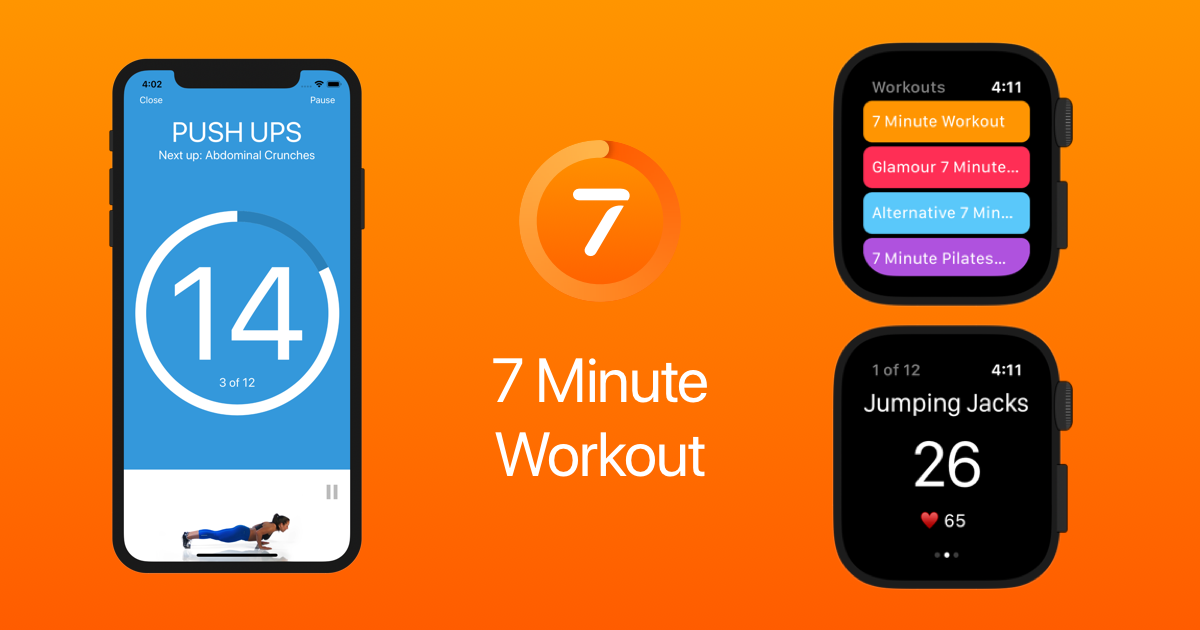
A timer app reduces friction. Our recommended option is the best 7 minute workout app, which includes demos, interval timers, and Apple Health sync so you just press start and follow along.
If you want a simple plan to follow, start with our 7 minute workout routine overview.
Guided intervals, clear demos, and tracking built in.
Related reading
- No equipment 7 minute workout
- Original 7 minute workout explained
- 7 minute workout results after 2 weeks, 30 days, 90 days
FAQ: bodyweight workout and 7 minute workout
- Is a 7 minute workout enough for a bodyweight workout? Yes, if you push intensity and train consistently. Add a second round as fitness improves.
- How often should I do a bodyweight workout? Three to five times per week works for most people. Daily is fine if you vary intensity and recover well.
- Do I need equipment? No. A chair and a wall are enough for step-ups, dips, and support.
- What if I am a beginner? Use easier variations like incline push-ups and marching jacks, then progress slowly.